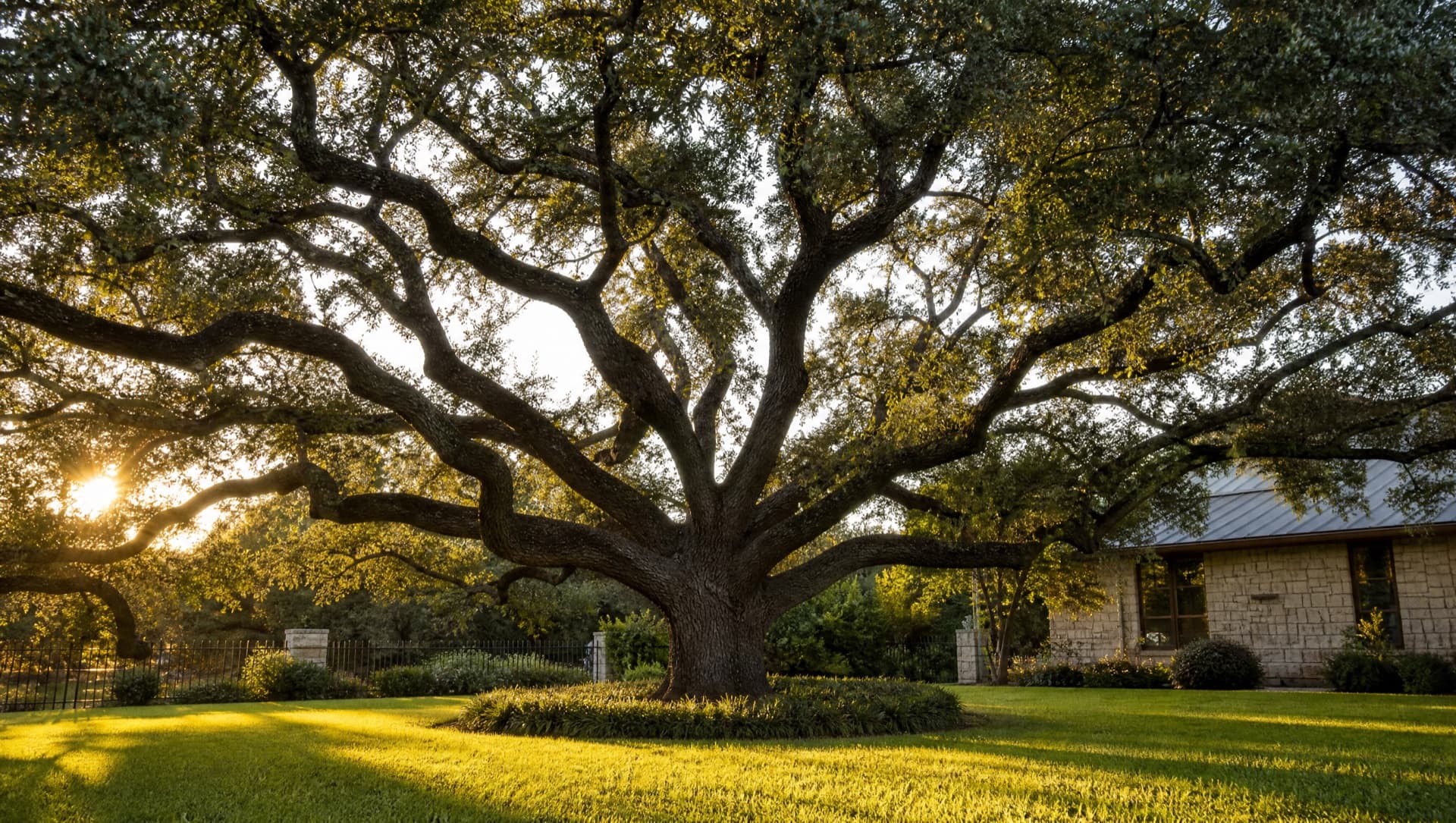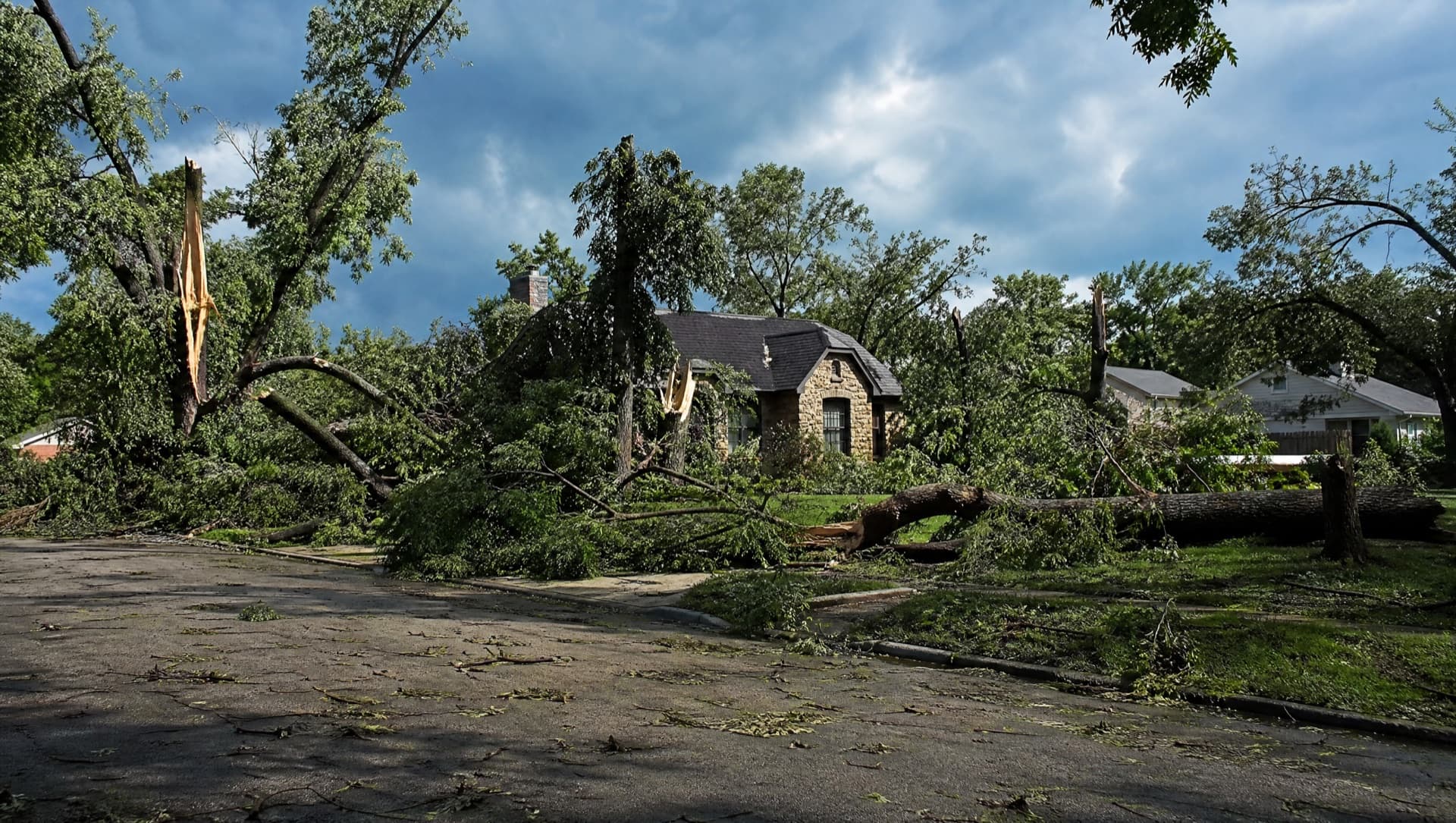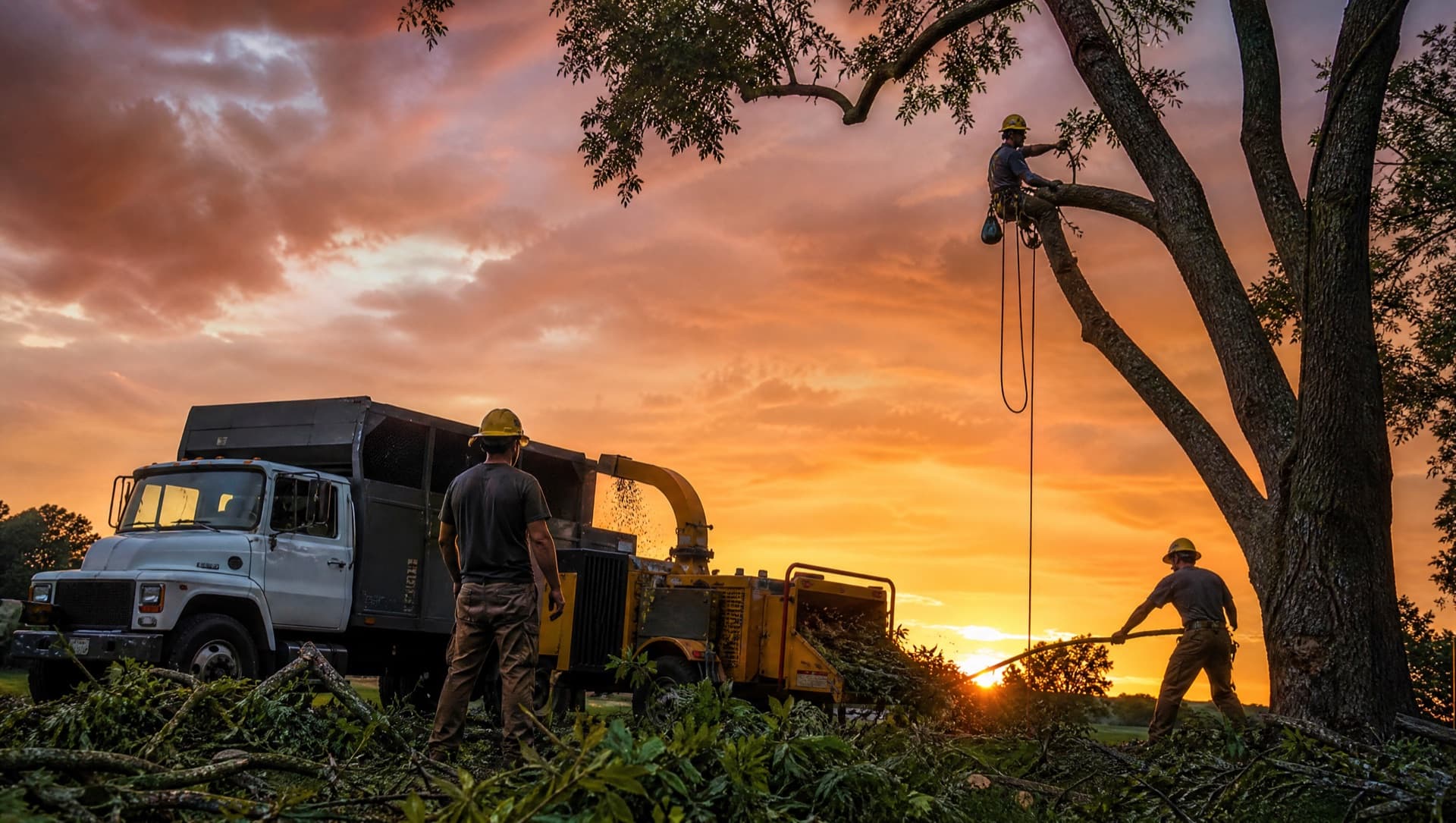
Trees rarely fail without warning — the signs are just easy to miss if you don't know what to look for. Here's the same quick risk assessment our arborists run on every property across Central Texas.
Start at the Base
Look for mushrooms or fungus, which indicate root or trunk decay. Check for lifting soil or exposed roots on one side, a sign the tree may be losing its anchor — common after our clay soils swell and shrink through a wet spring and a dry summer.
Examine the Trunk
Deep vertical cracks, large cavities, missing bark, and soft or hollow-sounding wood all point to structural weakness. A trunk that splits into a tight, V-shaped fork is also prone to failure — something we see often in fast-grown live oaks.
Look Up at the Canopy
Dead branches, a thinning crown, or a section that never leafs out are warning signs. With oaks, a sudden browning that spreads through the canopy can point to oak wilt and warrants an urgent look.
Check the Lean
A gradual, long-standing lean is usually fine. A sudden new lean is an emergency.
When in Doubt, Get an Inspection
A trained eye catches what an untrained one misses. Raymundo Tree Service's experienced arborists provide honest hazard assessments — and if a tree can be saved with trimming rather than removal, we'll tell you.
Schedule a free tree hazard inspection or call (254) 366-2700 for a free, no-obligation estimate.